

At a Glance
Peak season: Late June through mid-August. Mid-July is typically the apex across all elevations.
Best gateway: Betty Ford Alpine Gardens (free, 8,200 ft, Vail) — the best curated wildflower experience in the Vail Valley, with 3,000+ labeled alpine species. Open every day, no trail required.
Top trail picks: Booth Lake Trail, Deluge Lake Trail, Two Elk Trail, Gore Creek Trail, and the Bighorn Park area.
What to bring: Layers (afternoon thunderstorms are daily in July), sunscreen, water, a phone with iNaturalist downloaded.
Permits: None required for trails listed here. Standard Leave No Trace rules apply.
Wildflower season in Vail lasts about six weeks. If you miss it, you wait a year.
The window — roughly late June through mid-August — is when the alpine and subalpine meadows above and around Vail explode with color. Paintbrush. Colorado columbine. Sky pilot. Gentians. Asters. Species that spend 10 months dormant under snow get six weeks to bloom, set seed, and prepare for winter. The intensity of it — compressed into such a short window — is part of what makes Colorado wildflower season unlike anything else in the American West.
Here’s where to find it.
Start Here: Betty Ford Alpine Gardens
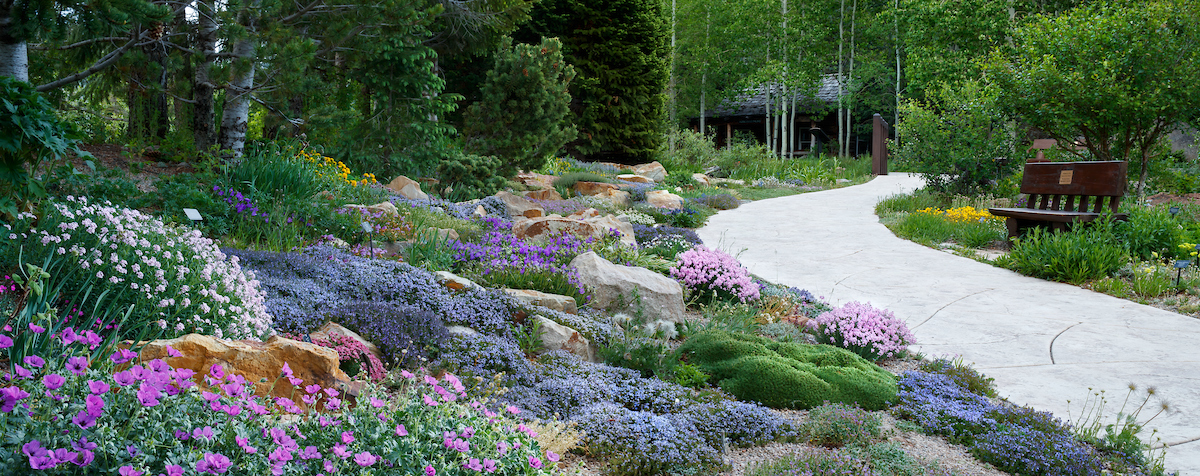
Before any trail recommendation, this needs to be said: Betty Ford Alpine Gardens is the best wildflower experience in the Vail Valley — and it requires no hiking whatsoever.
Located at 8,200 feet in Ford Park (522 S. Frontage Rd. E., Vail), Betty Ford Alpine Gardens is the only alpine-dedicated botanical garden in North America, with a living collection of 3,000+ species from mountain ranges across the globe. The plants are labeled. The paths are paved. Admission is free. It’s open every day from dawn to dusk.
For families with young children, visitors with mobility considerations, or anyone who wants to see the greatest possible variety of alpine wildflowers in a single location — this is your starting point.
Even committed hikers should spend 30–60 minutes here before hitting a trail. You’ll recognize the species you see on the mountain, know their names, understand their ecology, and have a dramatically richer experience as a result.
Trail 1: Booth Lake Trail — The Classic
Distance: 8.8 miles round trip
Elevation gain: 3,100 feet
Difficulty: Strenuous
Trailhead: Booth Creek Trailhead, East Vail (off I-70 at East Vail exit)
Peak wildflower window: Mid-July to early August (lower elevations earlier)
Best feature: Booth Falls (1 mile in) + subalpine meadows + Booth Lake at 11,480 feet
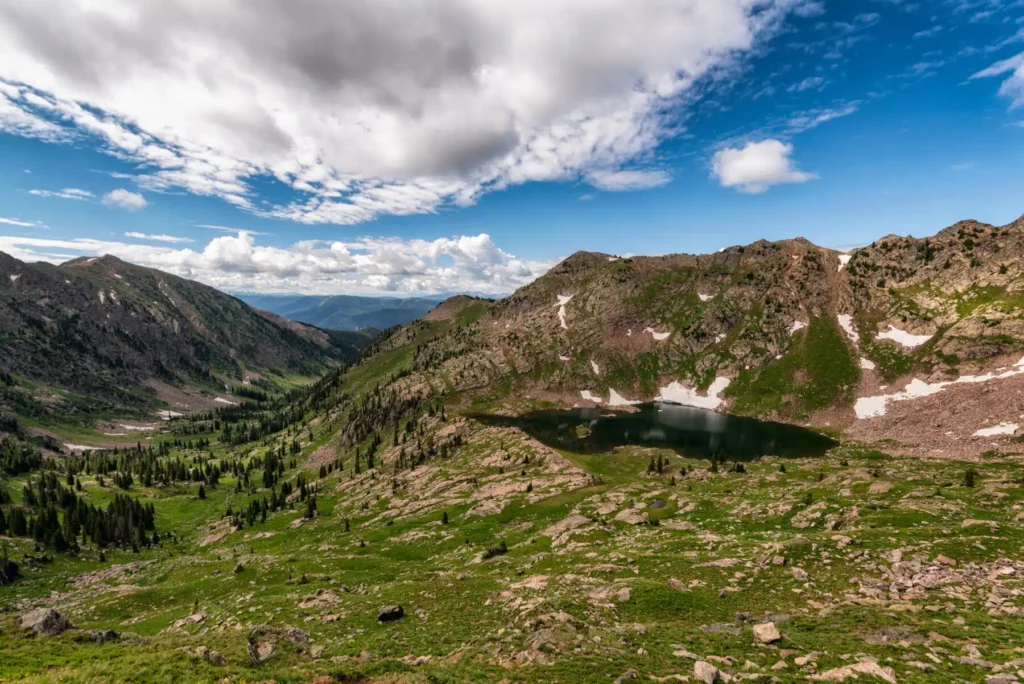
Booth Lake Trail is the benchmark wildflower hike near Vail — long, demanding, and exceptionally rewarding. The lower mile climbs through aspen groves and opens onto a series of spectacular meadows where wildflower density is as high as anywhere in Eagle County.
The trail passes Booth Falls at the one-mile mark — a 60-foot waterfall that creates the moist microhabitat that supports particularly dense wildflower growth. From here, the trail climbs steeply through conifer forest before breaking into subalpine terrain.
What you’ll see:
- Paintbrush in multiple color forms (red, orange, yellow, occasionally pink)
- Monkshood (dark violet-blue, extremely distinctive)
- Colorado blue columbine
- Mountain bluebells (massive patches in moist areas near the falls)
- Bistort (white, poker-shaped)
- Arnica and goldenrod in the upper meadows
- Gentians if you visit in August
Logistics: The parking area at Booth Creek Trailhead is small and fills by 7am in peak season. Start early or take the free Vail bus to East Vail and walk to the trailhead (adds about 0.5 miles).
Trail 2: Deluge Lake Trail — The Secret One
Distance: 8.6 miles round trip
Elevation gain: 3,100 feet
Difficulty: Strenuous
Trailhead: Gore Creek Campground, East Vail
Peak wildflower window: Mid-July to early August
Best feature: Less crowded than Booth; dramatic upper basin; excellent late-season gentians
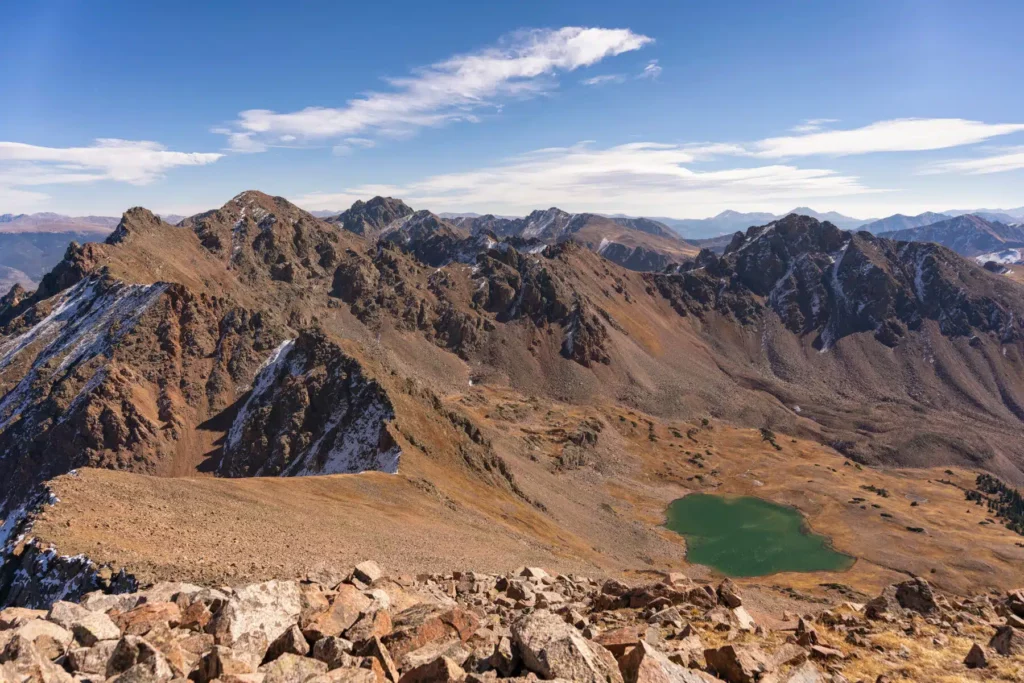
Deluge Lake parallels Booth Lake Trail in difficulty and elevation gain, but sees a fraction of the traffic. The upper basin opens into a high cirque that’s particularly good for late-season wildflowers (August) when Booth’s lower meadows are already fading.
What you’ll see:
- Mountain bluebells and bistort in the lower riparian sections
- Fleabane and arnica in mid-elevation meadows
- Sky pilot above 11,000 feet — worth the extra elevation specifically for this species
- Arctic gentian (Gentianodes algida) if you visit in August — ghostly white, one of the last wildflowers of the season
Logistics: Access via the Gore Creek Campground. More reliable parking than Booth early in the season, though peak weekends still fill up.
Trail 3: Two Elk Trail — The Traverse
Distance: 15.9 miles (full traverse); do as an out-and-back for any length
Elevation gain: 2,800 feet (full traverse)
Difficulty: Moderate to strenuous
Trailhead: Minturn (from the west) or Game Creek Bowl (from the east, accessed via Vail Mountain)
Peak wildflower window: Late June through mid-August depending on elevation
Best feature: Extended ridge and meadow walking with sustained wildflower views; multiple access points
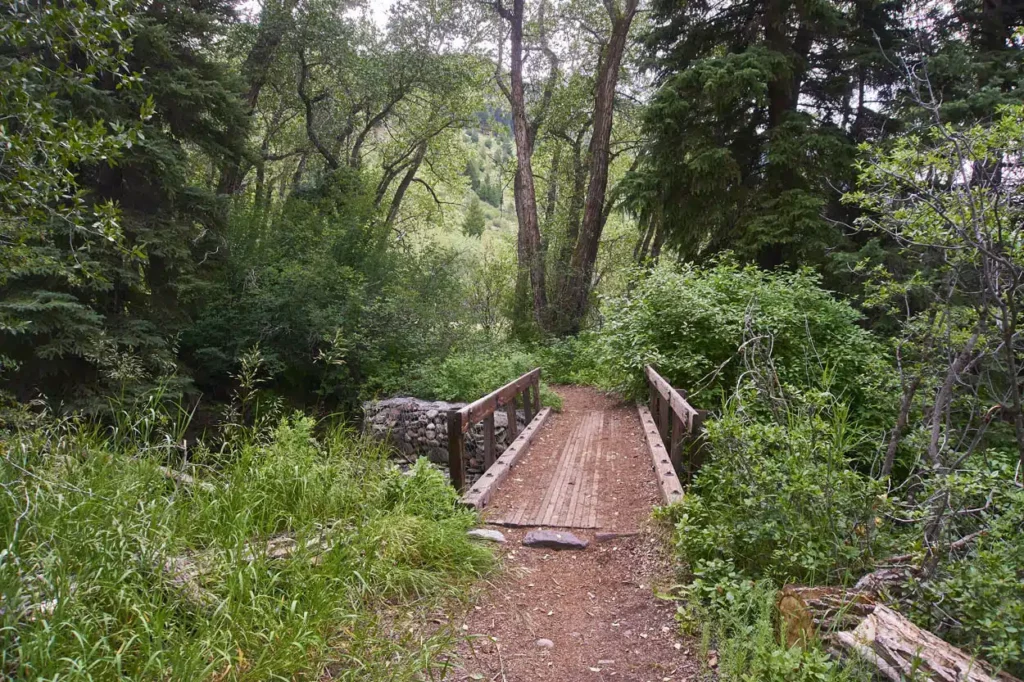
Two Elk is the broadest wildflower hiking experience near Vail — a long ridge traverse with sustained views and varied wildflower habitats from valley floor to subalpine meadow. The trail’s multiple access points mean you can tailor the route to your fitness level and schedule.
The Game Creek Bowl access (via Vail Mountain gondola) drops you directly into mid-elevation meadow terrain rich with early-to-mid season bloomers. The Minturn access climbs through aspen and conifer before reaching the open ridge.
What you’ll see:
- One of the most reliable paintbrush displays in Eagle County (mid-elevation sections)
- in lower meadows
- Lupine and penstemon along the ridgeline
- Death camas (white; toxic — important to know if you’re with kids or dogs)
Trail 4: Gore Creek Trail — The Easy Option
Distance: Variable; 2 to 10+ miles depending on how far you go
Elevation gain: Gentle in lower sections; gains elevation in upper canyon
Difficulty: Easy to moderate
Trailhead: Multiple access points; easiest at Bighorn Park, East Vail
Peak wildflower window: Late June through late July
Best feature: Accessible, flat lower sections; good for families; Gold Medal fishing alongside wildflower viewing
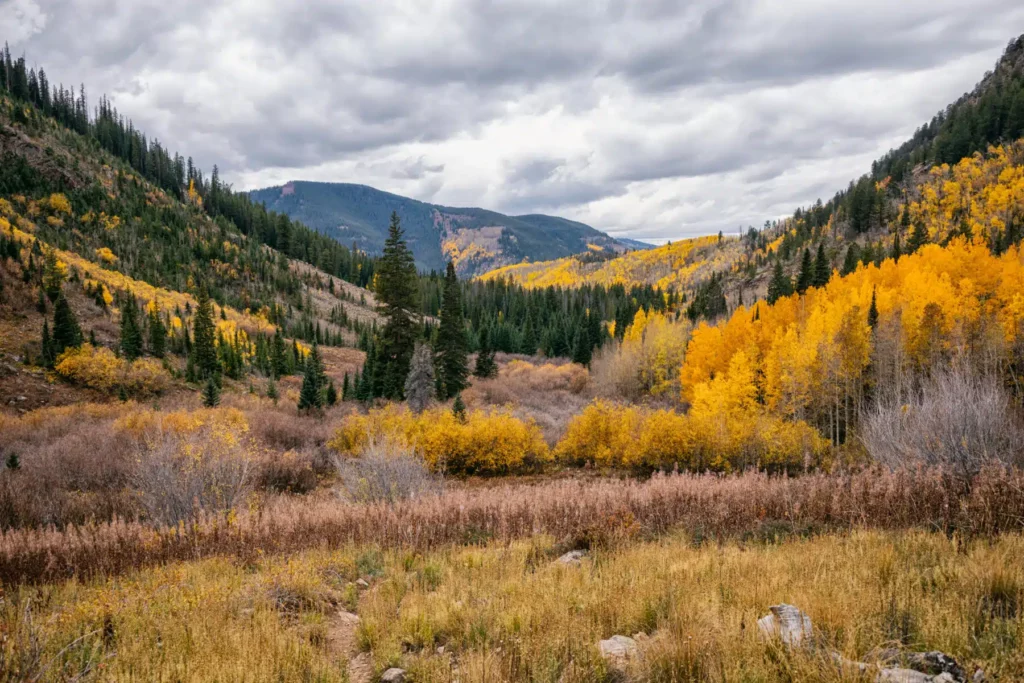
The Gore Creek Trail is the valley floor wildflower experience — not subalpine drama, but an accessible, beautiful riparian corridor through willows, cottonwoods, and meadows along one of Colorado’s best trout streams.
The first two miles from the Bighorn Park trailhead are easy enough for most fitness levels and feature reliable wildflower displays in the meadow sections. This is also the trail that connects through Ford Park to Betty Ford Alpine Gardens — you can hike in, visit the gardens, and hike back as a complete half-day experience.
What you’ll see:
- Mountain bluebells (enormous patches in early July along the creek)
- Wild iris (Iris missouriensis) in wet meadow sections
- Cow parsnip (large, white umbel; distinctive)
- Monkshood
- Fireweed
Trail 5: Vail Mountain Summit Trails — The High Route
Distance: Variable
Elevation gain: Variable (gondola access available; $$ in summer)
Difficulty: Moderate to strenuous
Access: Vail Mountain (via gondola or on-foot)
Peak wildflower window: Mid-July to early August at upper elevations
Note: Gondola access is not free; trails themselves are free
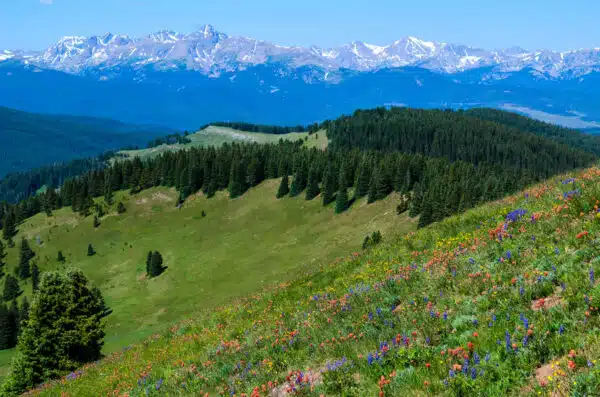
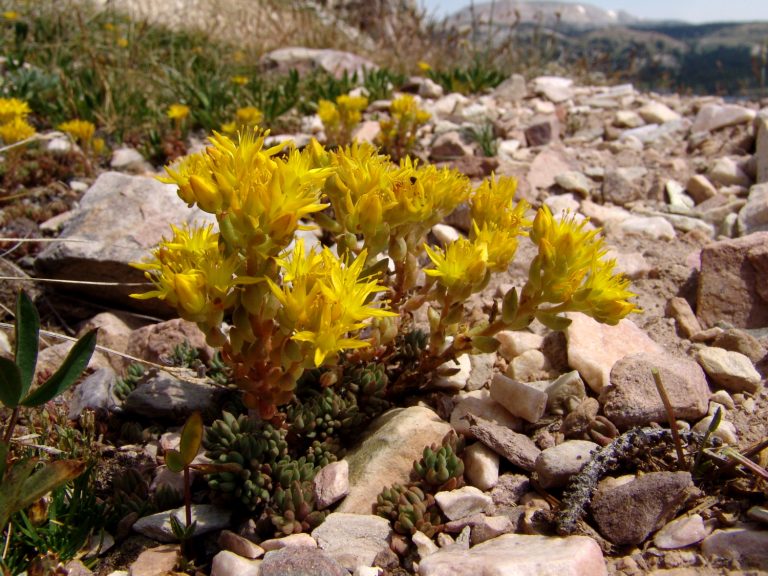
Vail Mountain’s summit terrain (10,000–11,500 feet) hosts genuine alpine wildflower communities — cushion plants, sky pilot, alpine forget-me-not, and dwarf willows that you won’t find at lower elevations. The gondola gets you to the wildflowers quickly; trails extend in multiple directions from the summit area.
If budget allows, this is the high-altitude wildflower experience — your chance to see species you don’t see on lower elevations trails without significant climbing.
Wildflower Hiking Tips for Vail
Go early. Wildflowers are at their best in morning light. You’ll also beat the inevitable afternoon thunderstorms that roll in by 1–2pm most summer days in the Rockies. Plan to be off exposed ridgelines by noon; there is significant danger from lightning strikes.
The mid-July sweet spot. July 10–25 is typically peak across all elevations around Vail. Early July is better at lower elevations; late July and August are better at higher elevations. If you can only visit once, aim for mid-July.
Bring layers. Temperature swings of 30–40°F between trailhead and summit are normal. Even on a warm summer day, conditions at 11,000+ feet can be cold and wet with little warning.
Know what you’re looking at. Download iNaturalist or the Betty Ford Alpine Gardens Wildflower app, before you go. Photographing and identifying species turns a beautiful hike into a genuinely educational experience. Your observations also contribute to real conservation science.
Don’t pick. Alpine wildflowers are slow-growing and fragile. A cushion plant mound the size of your fist might be 25 years old. Leave everything exactly as you found it. Stay on the trail. Disturb as little natural vegetation as possible.
Pair with Betty Ford Alpine Gardens. Start or end any wildflower hike with a visit to Betty Ford Alpine Gardens. The living collections are a reference library for everything you’ll see on the trail — and a conservation institution worth supporting.
FAQs
Q: When is wildflower season near Vail, Colorado?
A: Peak wildflower season near Vail runs from late June through mid-August, with mid-July typically being the apex across all elevations. Lower elevation trails and the valley floor peak first (late June through early July); subalpine meadows above 10,000 feet peak in mid-to-late July. Late-season hikers in August will find gentians, asters, and goldenrod still blooming at upper elevations.
Q: What is the easiest wildflower hike near Vail?
A: The Gore Creek Trail from Bighorn Park in East Vail offers the easiest wildflower hiking near Vail — flat, accessible terrain along a beautiful creek corridor with reliable wildflower displays in late June and July. For the greatest variety of wildflowers without any hiking, Betty Ford Alpine Gardens in Ford Park is free, with easy walking paths, just a short distance from Bridge Street in Vail Village, and open daily — 3,000+ labeled alpine species at 8,200 feet.
Q: What wildflowers are common near Vail, Colorado?
A: The most common and recognizable wildflowers near Vail include: Colorado blue columbine (the state flower), paintbrush in multiple color forms, mountain bluebells, monkshood, arnica, bistort, lupine, penstemon, and — at higher elevations — sky pilot, arctic gentian, and cushion phlox. Betty Ford Alpine Gardens in Vail grows all of these in its labeled living collection.
Q: Is Booth Lake Trail good for wildflowers?
A: Yes — Booth Lake Trail is one of the best wildflower hikes near Vail. The meadow sections between Booth Falls (1 mile) and treeline (~4 miles) are particularly rich, with paintbrush, monkshood, columbine, and mountain bluebells in peak season. Plan for mid-July. Start early — the parking area fills by 7am on weekends.
Q: Can I see wildflowers near Vail without hiking?
A: Absolutely. Betty Ford Alpine Gardens in Ford Park is the best no-hiking wildflower experience near Vail — a free, paved botanical garden at 8,200 feet with 3,000+ alpine species from around the world. All paths are accessible. The Children’s Garden makes it family-friendly. It’s open every day from dawn to dusk with no admission charge.
Q: Do I need a permit to hike near Vail in wildflower season?
A: No permits are required for any of the trails listed in this guide. Standard National Forest rules apply: pack out your trash, stay on established trails, don’t pick wildflowers, dogs must be on leash in some areas. Check with the Eagle-Holy Cross Ranger District for any seasonal closures or updated conditions before heading out.