 Betty Ford Alpine GardensBetty Ford Alpine Gardens


The Colorado Alpine EcoFlora Project is a community-science botany project powered by iNaturalist, the free, easy-to-use nature identification app. Everyone is welcome to join!
The two goals of this project are to:
We invite everyone to join the Project, no matter what level of participation you want to engage in.
From Observers snapping pictures of plants they see in the alpine to Identifiers confirming IDs and bringing observations to research-grade, we believe everyone can contribute meaningfully.
To get started, simply navigate to your iPhone’s App Store or your Android device’s Google Play Store to download the free iNaturalist app, or go to iNaturalist.org to make an account online.
Then, navigate to the “Projects” page (located under “Community” on the web) and search for “Colorado Alpine EcoFlora” to join our group and ensure your observations get uploaded to the Project.
You’re now ready to start naturalizing! For more information on how to post observations, check out the helpful articles and video tutorials from iNaturalist at the link below.
iNaturalist is a social network of naturalists, community scientists, and biologists built on the concept of mapping and sharing observations of biodiversity across the globe. It is a joint initiative between the California Academy of Sciences and the National Geographic Society, and is accessible via its website or through its mobile app.
People use iNaturalist to observe plants, fungi, lichens, and animals. All it takes to participate is the ability to upload geolocation-enabled photos to the website! Most smartphones are perfect for this use. When an observation is uploaded, the metadata stored with the photo is used to pinpoint the location and date where the photo was taken.
Using the map of alpine areas already created for the Alpine Strategy, we uploaded a polygon of just the Colorado alpine areas to iNaturalist to create this new project.
Now, any iNaturalist observation made within that polygon gets automatically funneled into the CO Alpine EcoFlora Project.
Community science or citizen science refers to the concept of research conducted by members of the public.
There are several well-known community science projects currently underway, including the Christmas Bird Count from Audubon, where people all over America contribute sightings of wildlife, and Project Budburst, a phenology project now housed under the Chicago Botanic Gardens, where people submit observations of the timing of plant phases.
Two of the most powerful benefits of community science are that:
The EcoFlora Project concept was developed by the New York Botanic Garden in 2017 with a grant from the Institute of Museum and Library Services, and has since been adopted by other gardens including Chicago Botanic Garden, Denver Botanic Garden, Desert Botanical Garden, and Marie Selby Botanical Gardens.
These Gardens use the EcoFlora Project to engage the citizens of their cities in nature, document diversity of these metropolitan areas, and keep an eye out for invasive species.
Here in the mountains, we have a slightly different motivation, since generally have access to much more nature, but the framework is still applicable and will help document alpine plant diversity.
Here at Betty Ford Alpine Gardens, the North American Botanic Garden Strategy for Alpine Plant Conservation (the Alpine Strategy, for short) guides our conservation efforts. The Alpine Strategy is a blueprint for the conservation and protection of alpine plants and their habitats in the US, Canada, and Mexico, with a focus on the role of botanical gardens in this effort. It was developed by Executive Director, Nicola Ripley, and published in 2020 in conjunction with Denver Botanic Gardens.
There are four main objectives:
As part of the first objective, we have developed a map of the alpine areas in North America using Geographic Information Systems (GIS), a suite of powerful tools to understand and visually render detailed geographic data.
We have also recently completed a years-long effort to compile a list of all North American alpine plant taxa, their distributions, and conservation statuses using field guides, online resources, and personal observations. We want to know what we are conserving, as well as where to find it!
Traditionally, scientists use surveys and specimen collection to create what is referred to as a Flora, or a document of all the plants in an area (such Dr. Jennifer Ackerfield’s Flora of Colorado, the gold standard our team uses for plant identification). However, this is generally not a dynamic understanding of where these plants are or their phenology throughout the season, and is limited by when and where scientists go.
When members of our team go out into alpine environments, they make a floristic inventory, essentially a list of all the plants they see and their phenology. But we are only a few individuals and the alpine plant season is very short, so we wanted to find a way to see what alpine plants are where, beyond what we could observe ourselves. This led to the creation of the Colorado Alpine EcoFlora Project.
As of October 2026, there are over 148,700 observations of more than 1,900 species by almost 10,000 observers in the Colorado Alpine EcoFlora Project. Many of these are already research-grade, having been verified by other users.
Over the next several years, we plan to expand participation in the Colorado Alpine EcoFlora Project by:
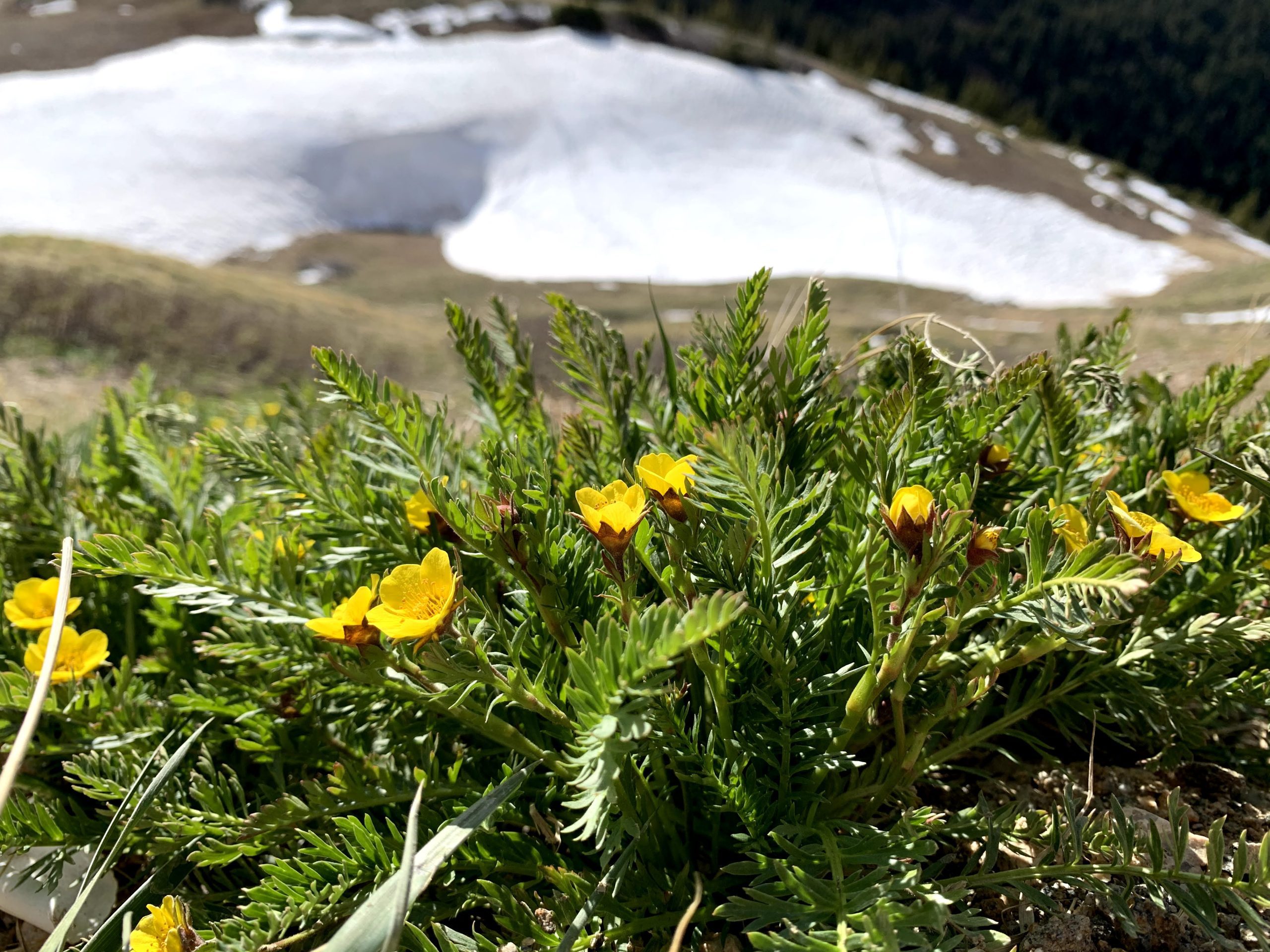
Alpine Avens (Geum rossii var. turbinatum), the most-observed alpine plant on iNaturalist.
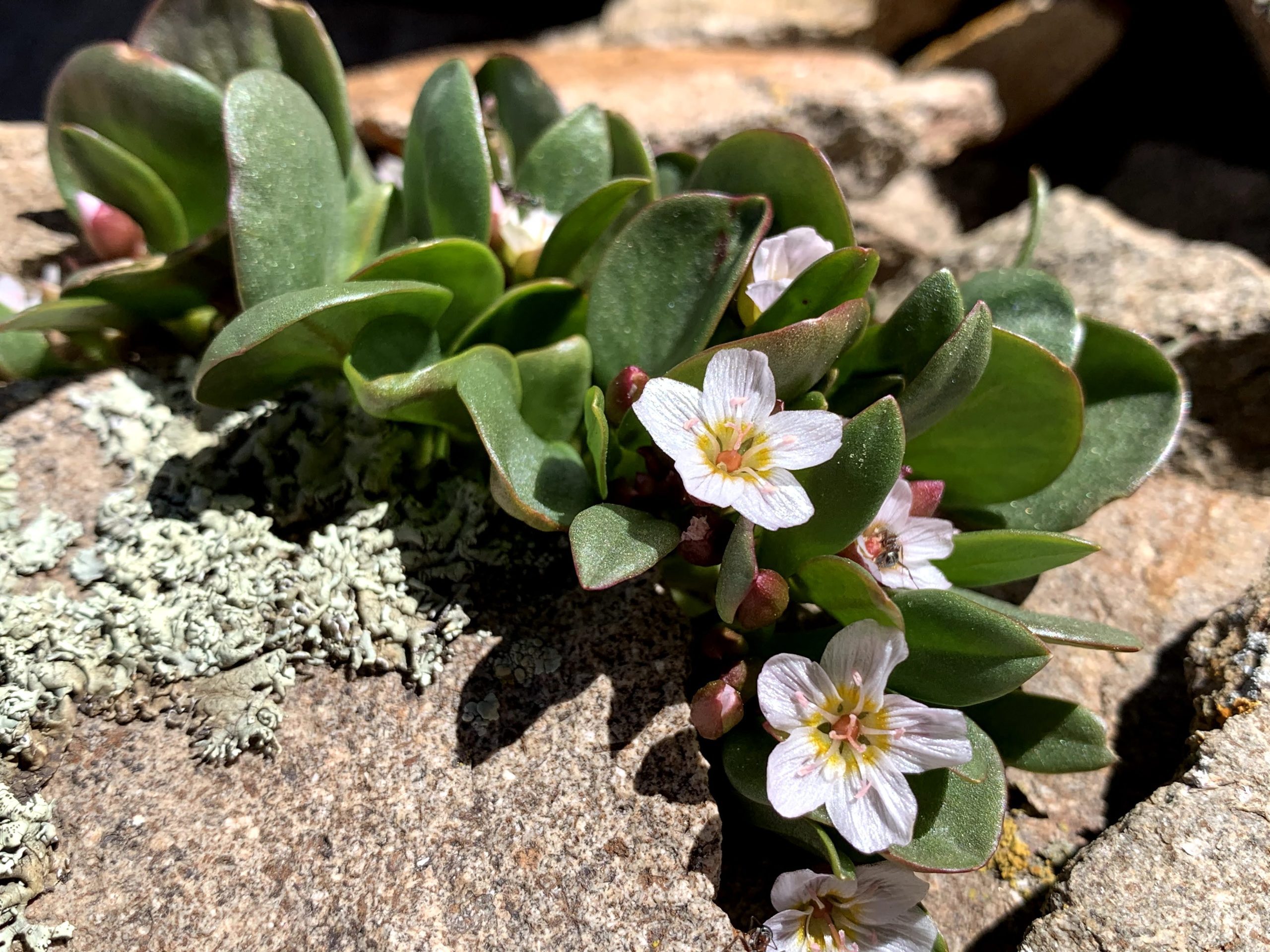
Alpine Spring Beauty (Claytonia megarhiza), a rock-dwelling alpine species which can have a root grow up to six feet long.
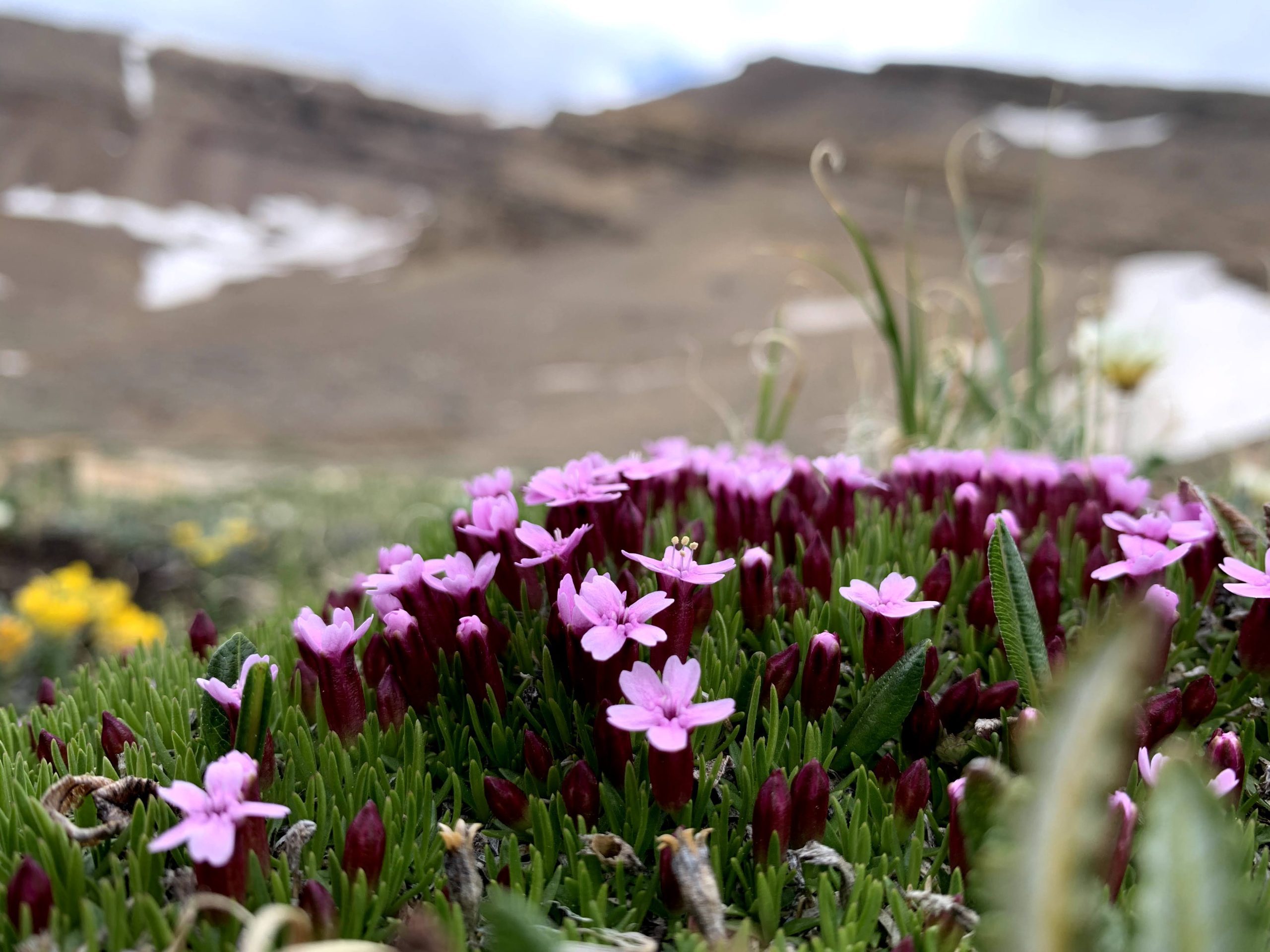
Moss Campion (Silene acaulis), one of the quintessential cushion plants of CO’s alpine.